

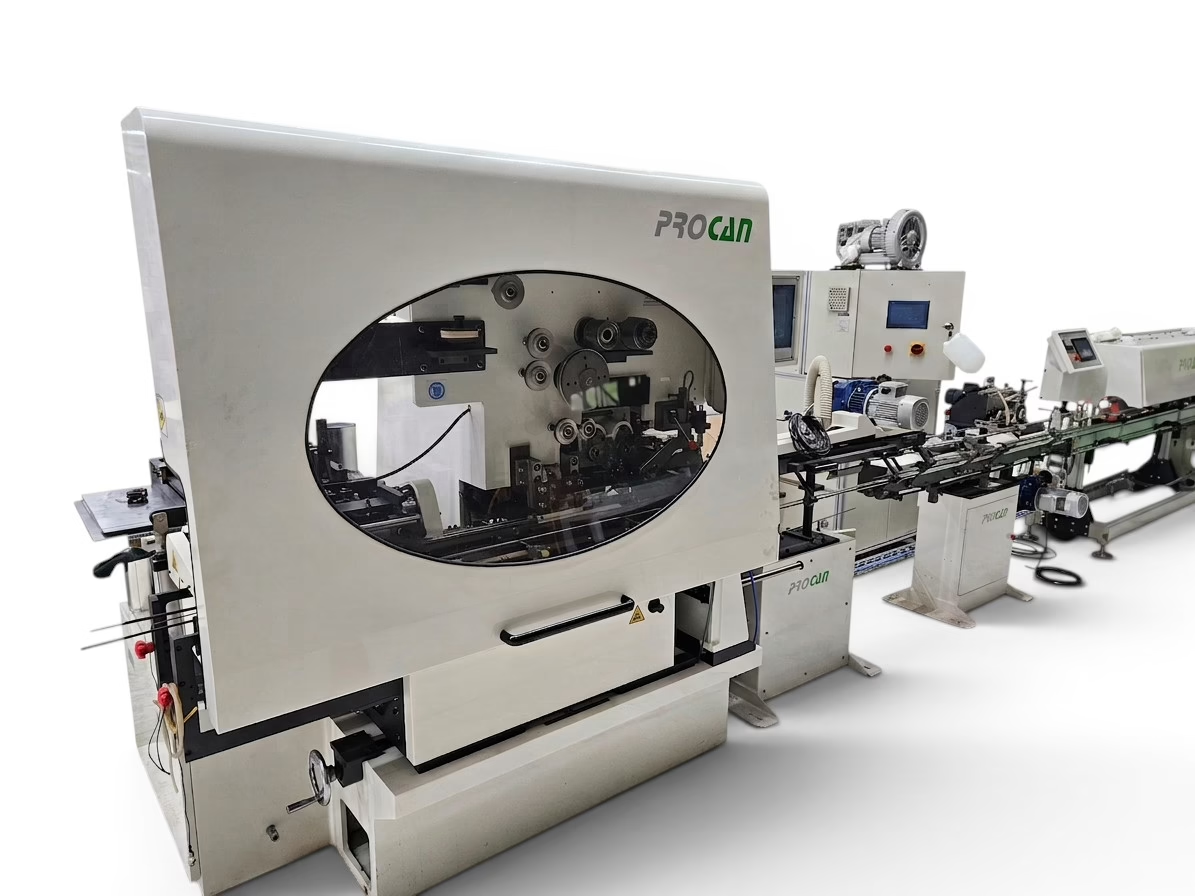
Body welding articles
In the body welding FAQ articles overview you can find answers to frequently asked questions about body welding machines for can makers.


In the body welding FAQ articles overview you can find answers to frequently asked questions about body welding machines for can makers.
It forms a cylindrical can body and welds the side seam. The welder takes a flat blank and produces a finished body, and the quality of that seam depends on overlap, welding current, and the condition of the rollers and wire.
Tinplate, ECCS, and TFS depending on application. These are the same can-making materials processed elsewhere in the line, including at the slitting stage where sheets are cut into body blanks.
Overlap, welding current, roller condition, wire condition, and machine setup. Weld quality can be improved by optimizing machine setup and maintaining these critical components.
Low current, contamination, poor overlap, or worn components. Each of these relates back to machine setup or to the condition of critical parts such as rollers, wire guides, and copper wire components.
Excessive current or incorrect overlap. Both are setup factors, and correcting them is part of optimizing machine setup to achieve consistent weld seam quality.
To transfer current and protect welding rollers. Copper wire components are among the critical spare parts for a body welder, alongside rollers, wire guides, sensors, and bearings.
Depending on production volume and maintenance practices. Rollers are one of the critical spare parts for a body welder, and their condition directly affects weld quality.
Yes. One welder can produce multiple can diameters. As with other PROCAN machines, the formats available depend on the tooling configuration, and additional tooling can usually be supplied later.
Depends on the machine model. Can dimensions, together with material and production speed, are among the specifications used to select the appropriate welder for a given application.
Depends on the PROweld model selected. Production speed is also influenced by product dimensions, and by the configuration and automation level of the line as a whole.
Through visual inspection, testing, and quality control procedures. Finished cans can additionally be leak tested, which detects leaks and integrity failures before products reach customers.
Heat settings, contamination, or process instability. These are the same factors that affect weld quality generally, and are addressed through machine setup and maintenance of critical components.