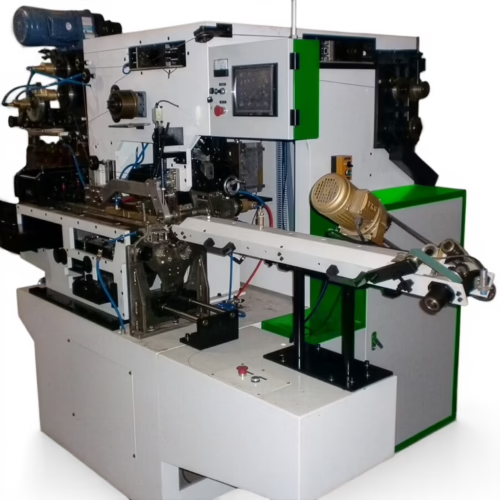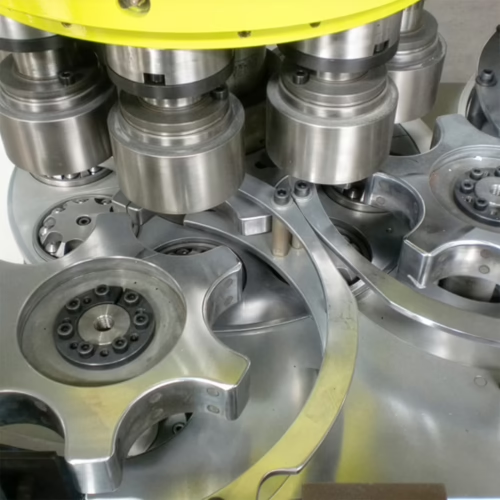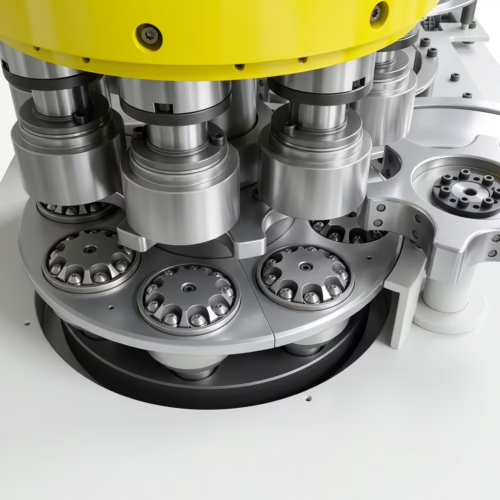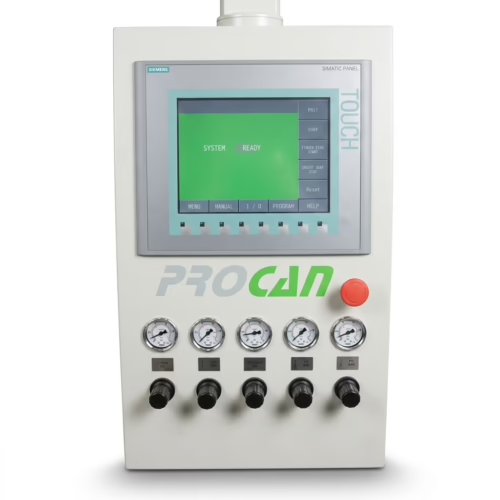


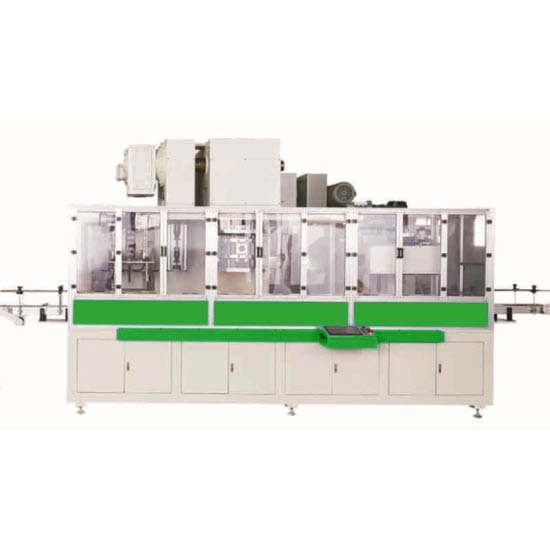
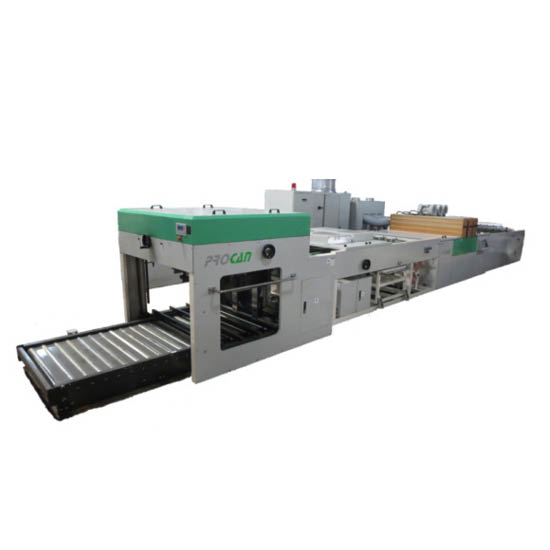
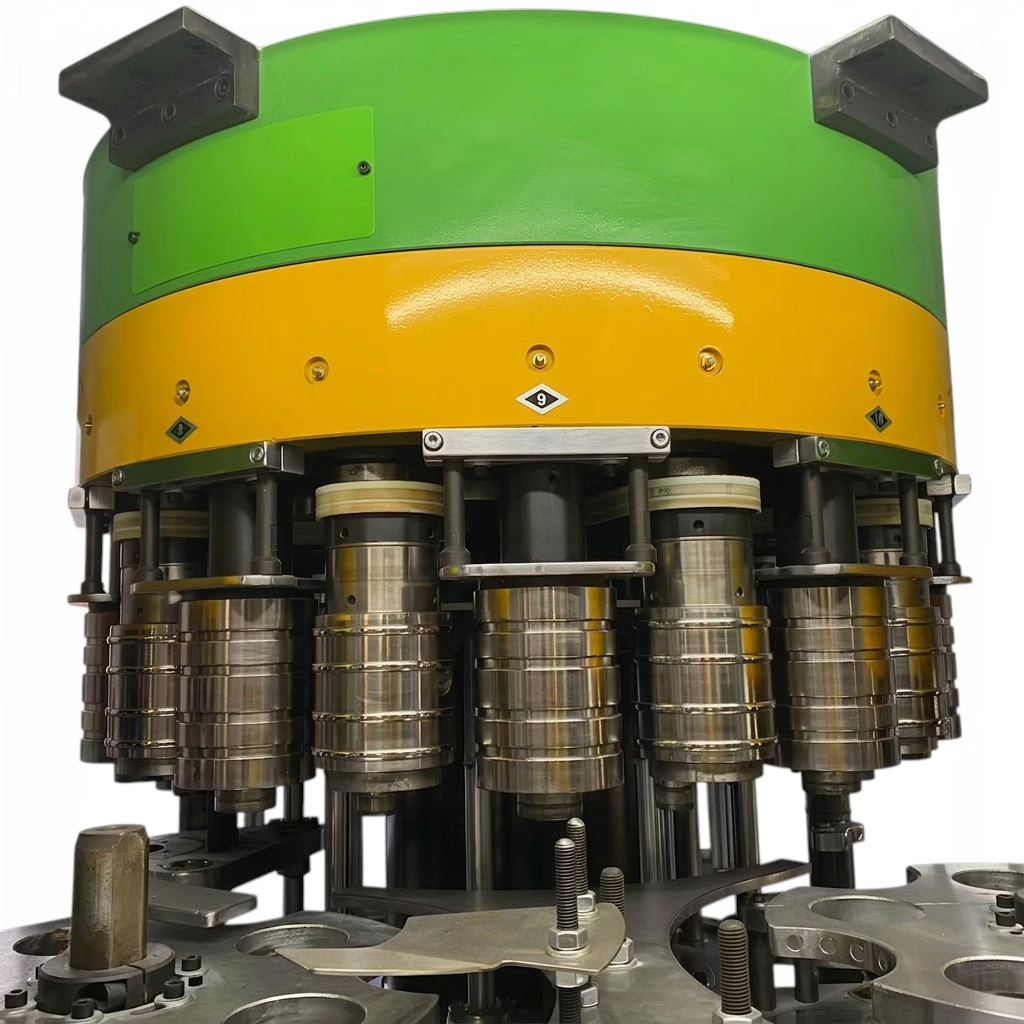
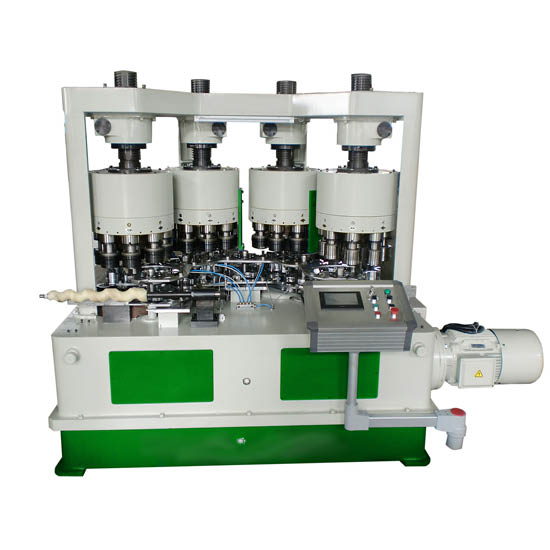
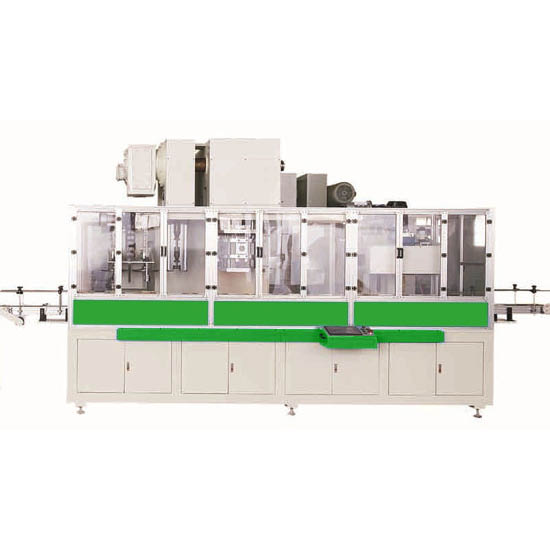
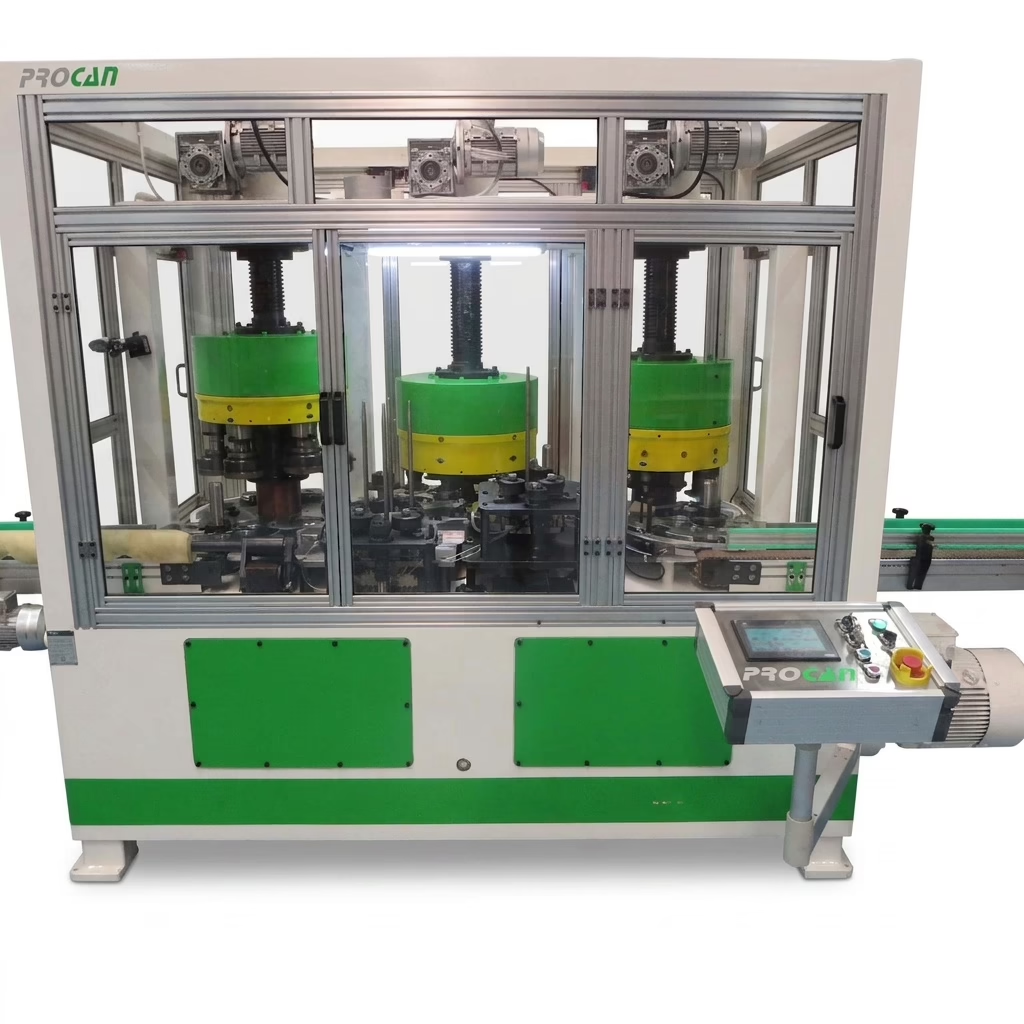
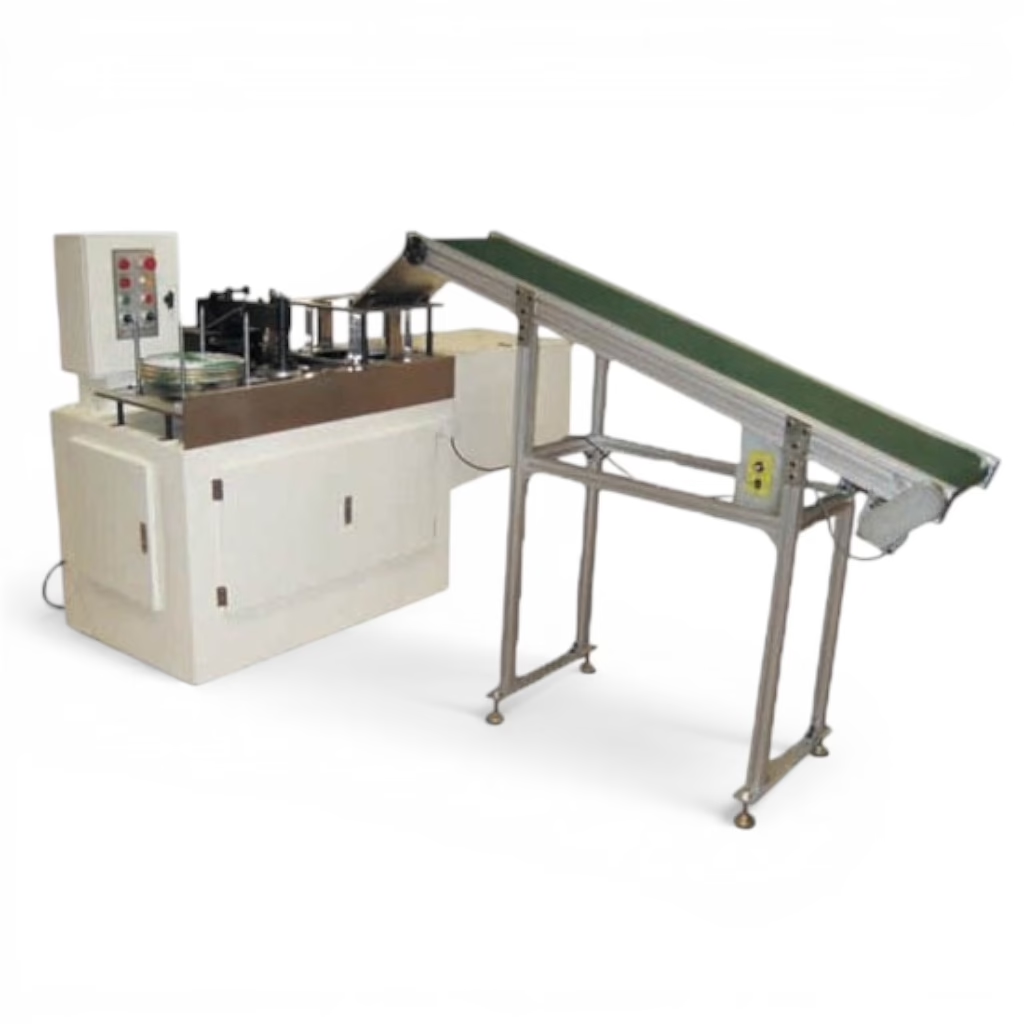
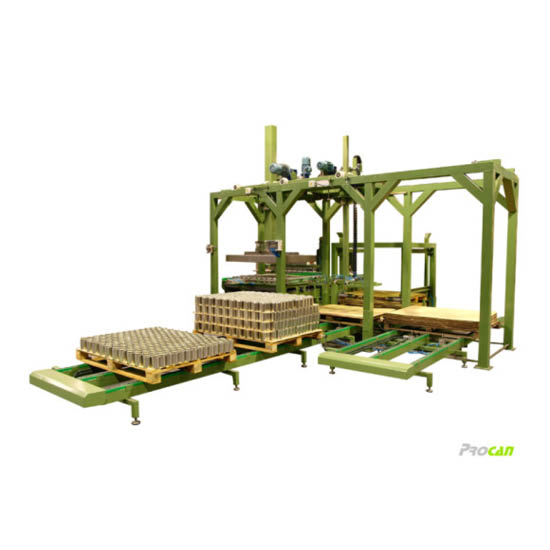
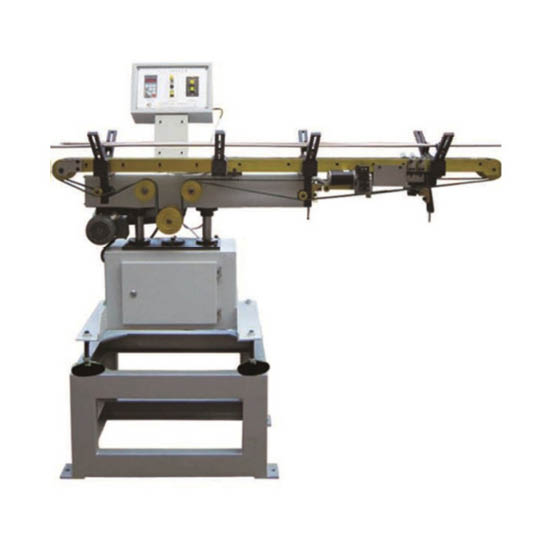
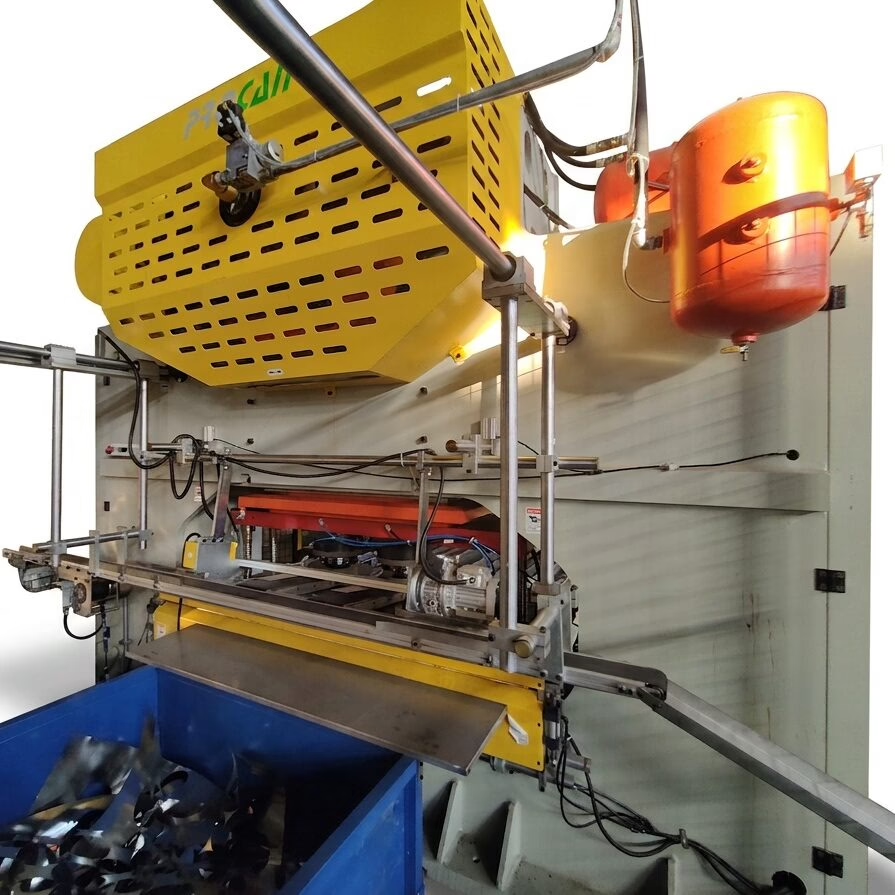
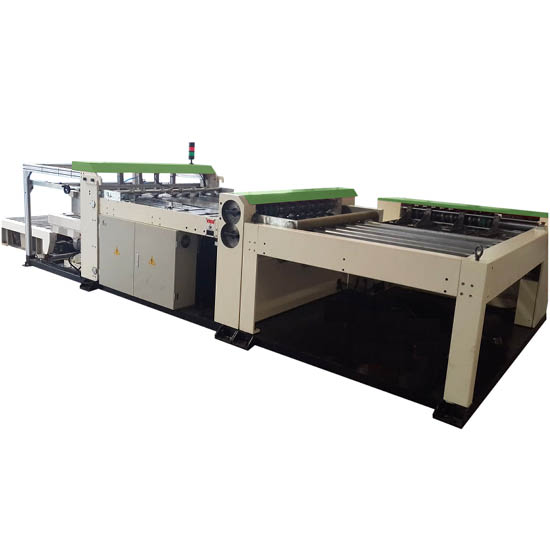
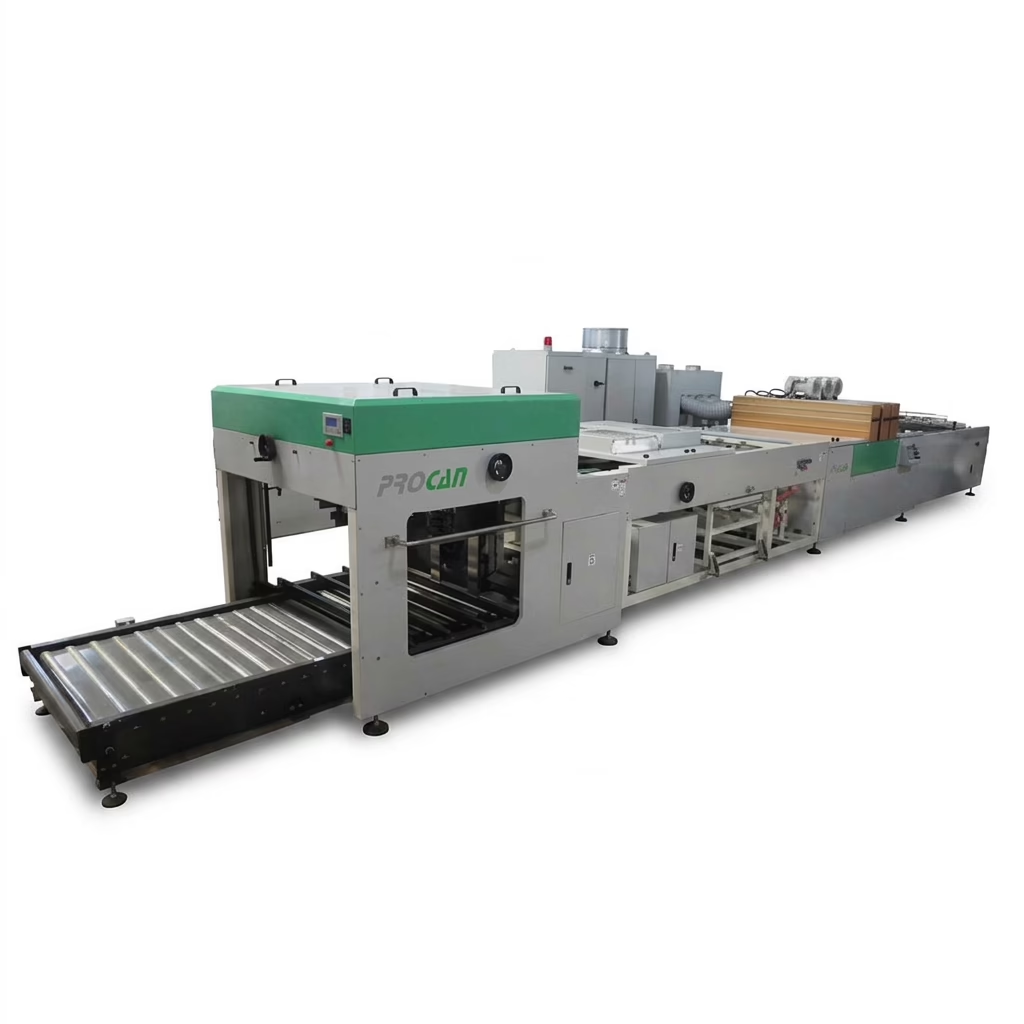
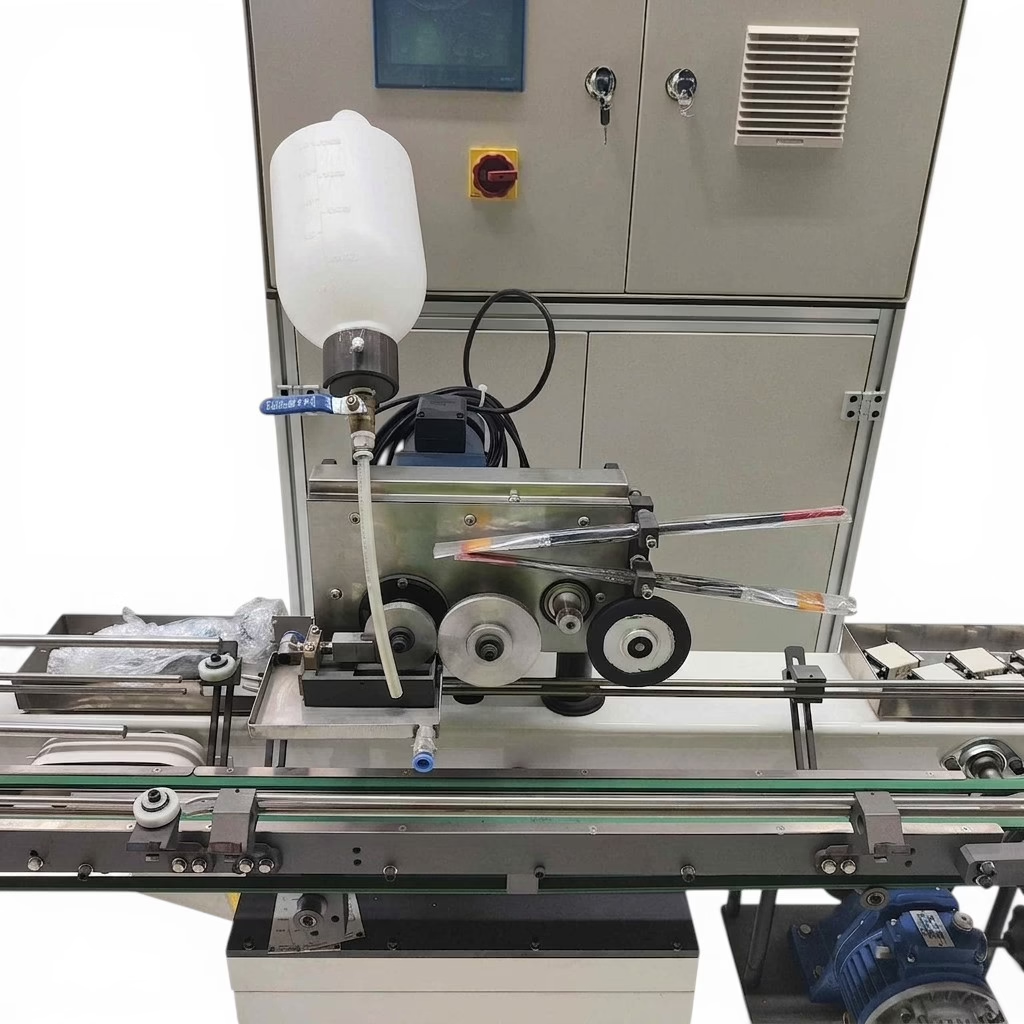
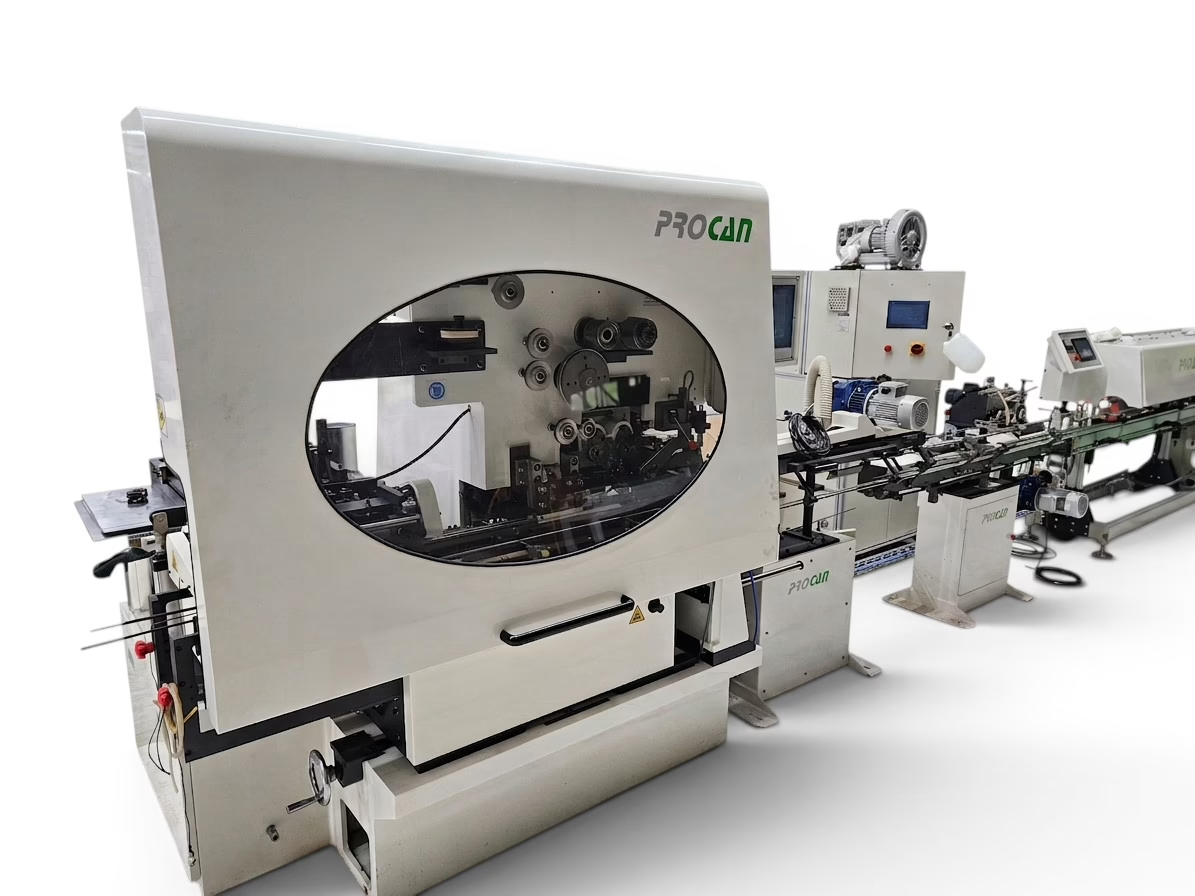


Automatic duplex slitter designed for precision cutting of tinplate sheets into body blanks. The machine combines high productivity, excellent cutting accuracy, and efficient material utilization.
Additional information
| Weight | 5145 kg |
|---|---|
| Dimensions | 6700 × 3700 × 1500 mm |
| Minimum sheet dimensions | 600 × 600 mm |
| Maximum sheet dimensions | 1200 × 1200 mm |
| No. of knives 1st operation | 5 knives included |
| No. of knives 2nd operation | 8 knives included |
| Sheet thickness | 0.16 – 0.50 mm |
| Speed | Up to 30 sheets per min |
| Machine dimensions | 6700 x 3700 x 1500 mm |
| Weight | 5,145 kg |
Description
PROcut 1200 DS Automatic duplex slitter
The PROcut 1200 DS is a fully automatic duplex slitter designed for precise cutting of tinplate sheets into body blanks. The machine features accurate sheet feeding, high-speed cutting, and efficient material utilization. Reliable operation and excellent cutting precision ensure maximum productivity in modern can-making facilities.
Min. sheet size.: 600 x 600 mm
Max. sheet size: 1200 x 1200 mm
No. of knives 1st operation: 5 knives included
No. of knives 2nd operation: 8 knives included
Sheet thickness: 0.16 – 0.50 mm
Speed: up to 30 sheets per minute
Dimensions: 6700 x 3700 x 1500 mm
Weight:5145 Kgs.
Slitting
What does a duplex slitter do?Job Folbert2026-08-06T22:42:09+02:00
Cuts metal sheets into body blanks. These blanks are the starting material for the can body, which is then formed and welded on the body welder further down the line.
Why is slitting accuracy important?Job Folbert2026-08-06T22:42:09+02:00
It directly affects can diameter and weld quality. Because the blank determines the finished body dimensions, inaccuracy at the slitting stage carries through to the overlap and seam produced by the welder.
What materials can be processed?Job Folbert2026-08-06T22:42:09+02:00
Tinplate, ECCS, and other can-making materials. These are the same materials processed at the welding stage, so the slitter and the body welder handle a comparable range of can-making steel.
What sheet sizes can be processed?Job Folbert2026-08-06T22:42:09+02:00
Depends on machine configuration. Sheet handling is part of the machine specification, so the sheet sizes a given slitter accepts follow from how that machine has been configured for the customer.
What thickness range is supported?Job Folbert2026-08-06T22:42:09+02:00
Depends on model and customer requirements. Material thickness is one of the specifications used to select the appropriate machine, alongside sheet size and required production speed.
What affects slitting quality?Job Folbert2026-08-06T22:42:09+02:00
Knife condition, setup accuracy, and material quality. Because slitting accuracy carries through to can diameter and weld quality, maintaining the knives and the setup is important for the line as a whole.
How often should knives be replaced?Job Folbert2026-08-06T22:42:09+02:00
Depending on production volume and material type. Knife condition is one of the main factors affecting slitting quality, so replacement intervals are set by how the machine is actually used.
Can multiple blank sizes be produced?Job Folbert2026-08-06T22:42:09+02:00
Yes. Blank width is determined by the distance between the knives, so the machine can be set up to produce different blank sizes. This allows the slitter to supply blanks for more than one can format.
How long does changeover take?Job Folbert2026-08-06T22:42:09+02:00
Depends on tooling configuration. Changeover involves resetting the machine for a different blank size, so the time required follows from how the tooling is arranged for the formats being run.
Can the machine be automated?Job Folbert2026-08-06T22:42:09+02:00
Yes. The duplex slitter runs as an automatic machine and can be switched between automatic and manual operation. The level of automation is set for each project, alongside the rest of the line configuration.